Bunzlauer Str. 7 80992 München, Germany
Akhetonics is a German deep-tech company developing a new generation of computing hardware based on integrated photonics. Founded in 2021 and headquartered in Berlin and Munich, Akhetonics is working toward the development of a fully optical digital computer, using light rather than conventional electronic signals for computation and data processing.
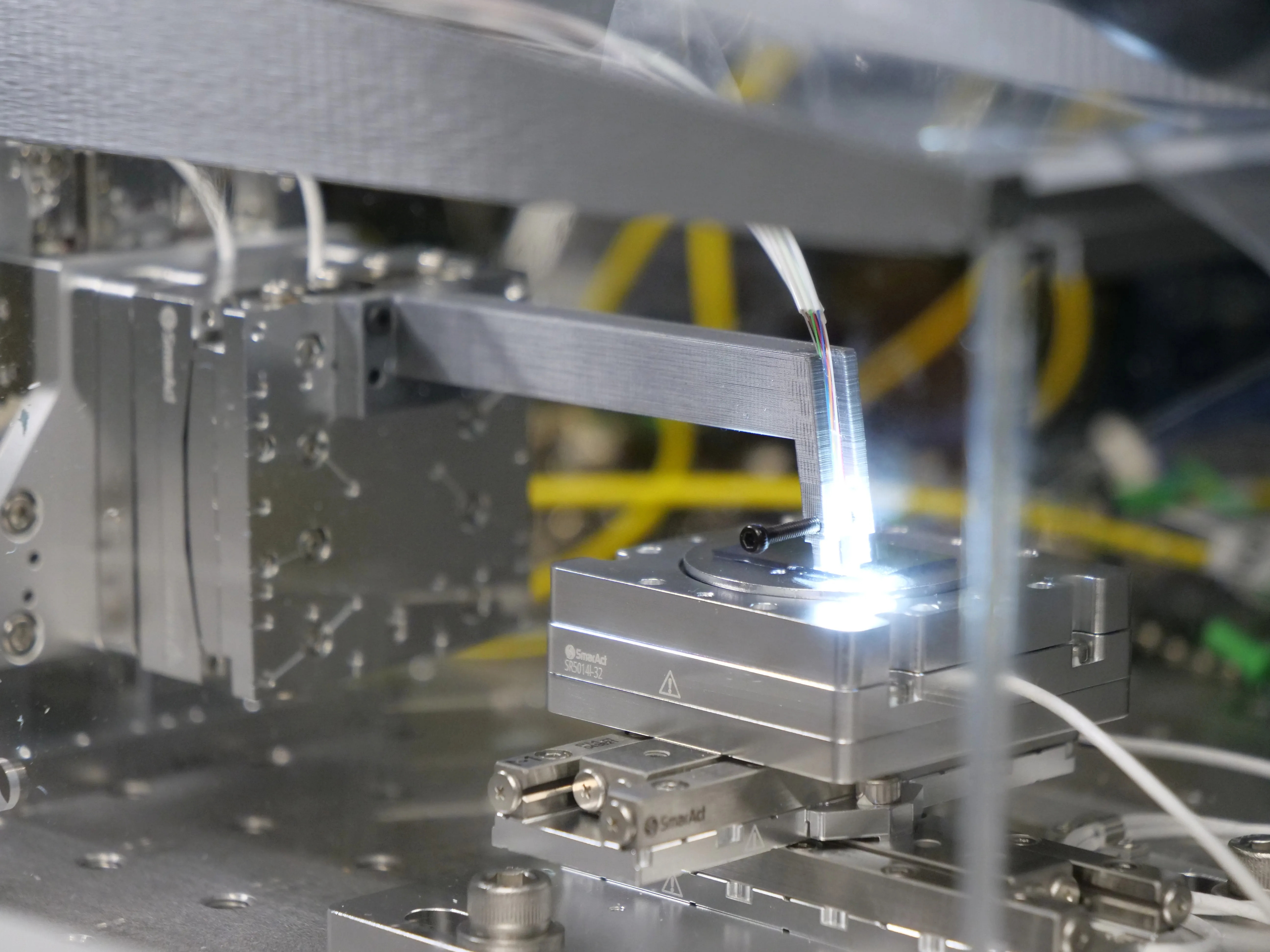
Our technology combines photonic integrated circuits, optical computing architectures, and advanced hardware and software development. By leveraging the inherent advantages of photonics, including high bandwidth, parallelism, and energy-efficient data processing, Akhetonics aims to address some of the fundamental limitations of conventional electronic computing systems. Our work spans the full technology stack, from the design and simulation of photonic integrated circuits to experimental characterization, system integration, packaging, electronics, and software.
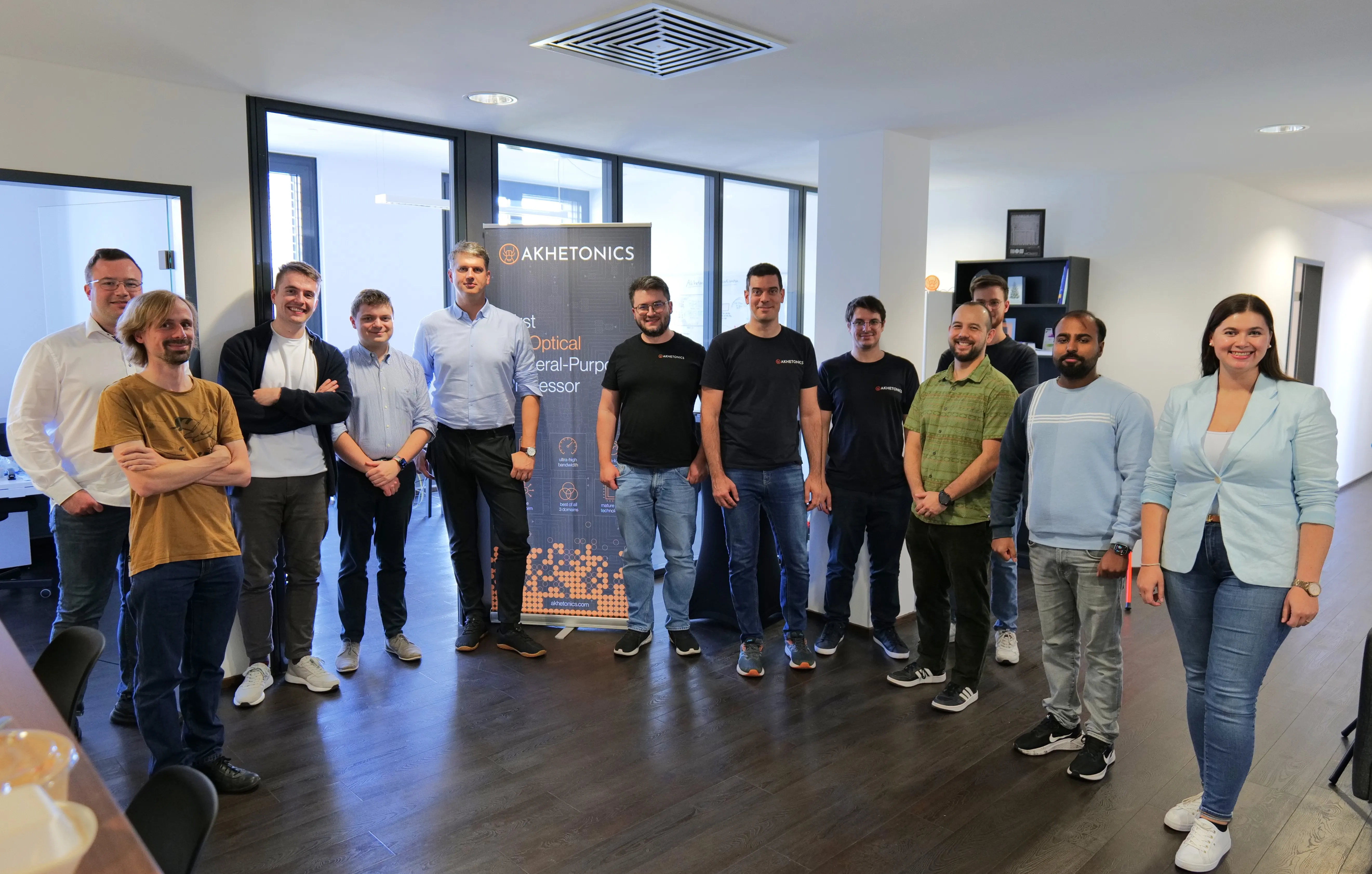
Akhetonics brings together an interdisciplinary and international team of physicists, photonics engineers, electrical engineers, computer scientists, and software developers. Research and development are at the core of our work, and we collaborate with universities, research institutes, foundries, and technology partners across Europe and internationally.
As a growing deep-tech start-up, we offer an environment in which students and researchers can work closely with experienced team members on real technological challenges. Projects can range from photonic chip design and experimental photonics to electronics, FPGA development, software, and optical computing architectures, providing hands-on experience at the intersection of scientific research and industrial technology development.
See the Website
The SDK and Profiler team at Akhetonics develops software tools that help colleagues use, integrate, and understand the performance of Akhetonics' computing technology. The immediate team consists of two developers, Max Aigner and Pedro, within a broader software engineering group of approximately six to seven people. Engineers have distinct areas of responsibility and collaborate across team boundaries as projects require.
The team's main focus is the software development kit, performance profiling, and integration between internal tools and workflows. This includes work on Akhetonics Desktop, its profiler, and integration with Akhetonics Hub. The team builds tools that make performance information easier to inspect and help developers identify bottlenecks in shaders and kernels. The team also develops interfaces for AI-assisted workflows, including tools based on the Model Context Protocol, and shares practical approaches with colleagues through workshops and technical discussions.
The team's work connects closely with the laboratory. Depending on the project, the team helps improve laboratory software, automate repetitive tasks, and connect experimental workflows with the wider software environment. The broader engineering environment also includes colleagues working on hardware-related tools, FPGA development, and packaging. These areas provide context and opportunities for collaboration; the internship itself will centre on software development.
A student joining the team will work in a small, collaborative setting where implementation choices are discussed directly with the developers who use and maintain the tools. Tasks will be scoped to the student's experience and to current project needs.
The intern will support the SDK and Profiler team with practical software development tasks. The main objective is to improve developer tools and internal workflows while gaining experience in a small engineering team. Initial work will involve learning the relevant codebase, setting up the development environment and completing a clearly scoped programming task with guidance from the mentor.
Depending on current priorities and the student's skills, assignments may include implementing small SDK features, improving profiler functionality or user interfaces, writing scripts for laboratory automation, adding tests, fixing bugs and improving technical documentation. The intern may also help connect tools with Akhetonics Hub or explore interfaces for AI-assisted engineering workflows.
Profiling tasks could involve collecting and presenting performance information, reproducing bottlenecks and helping developers understand the behaviour of shaders or kernels. Work will be organised around concrete deliverables, with regular discussion of requirements, implementation choices and results. The student will be encouraged to ask questions, explain trade-offs and take increasing ownership as familiarity with the project grows.
Collaboration with laboratory and other software colleagues may be part of an assignment, while specialist hardware work will depend on project needs and relevant experience. By the end of the internship, the student should have contributed reviewed software changes, documented their work and demonstrated the resulting tool or improvement to the team.
The precise scope will be agreed at the start so that the project is achievable within the internship period and provides useful learning as well as a practical contribution.
From June 14 to September 5, 2027 (adjustable at the discretion of the organisation)
Bunzlauer Str. 7 80992 München, Germany