
Za Radnicí 828, 252 41 Dolní Břežany, Czech Republic
HiLASE Centre is an advanced research and development facility established to pioneer high-power laser technologies and their applications across industry, science, and emerging sectors such as space and defence. Based in Dolní Břežany, Czech Republic, the Centre operates under the Institute of Physics of the Czech Academy of Sciences, combining research with innovation to strengthen the technological competitiveness of Europe’s laser ecosystem.
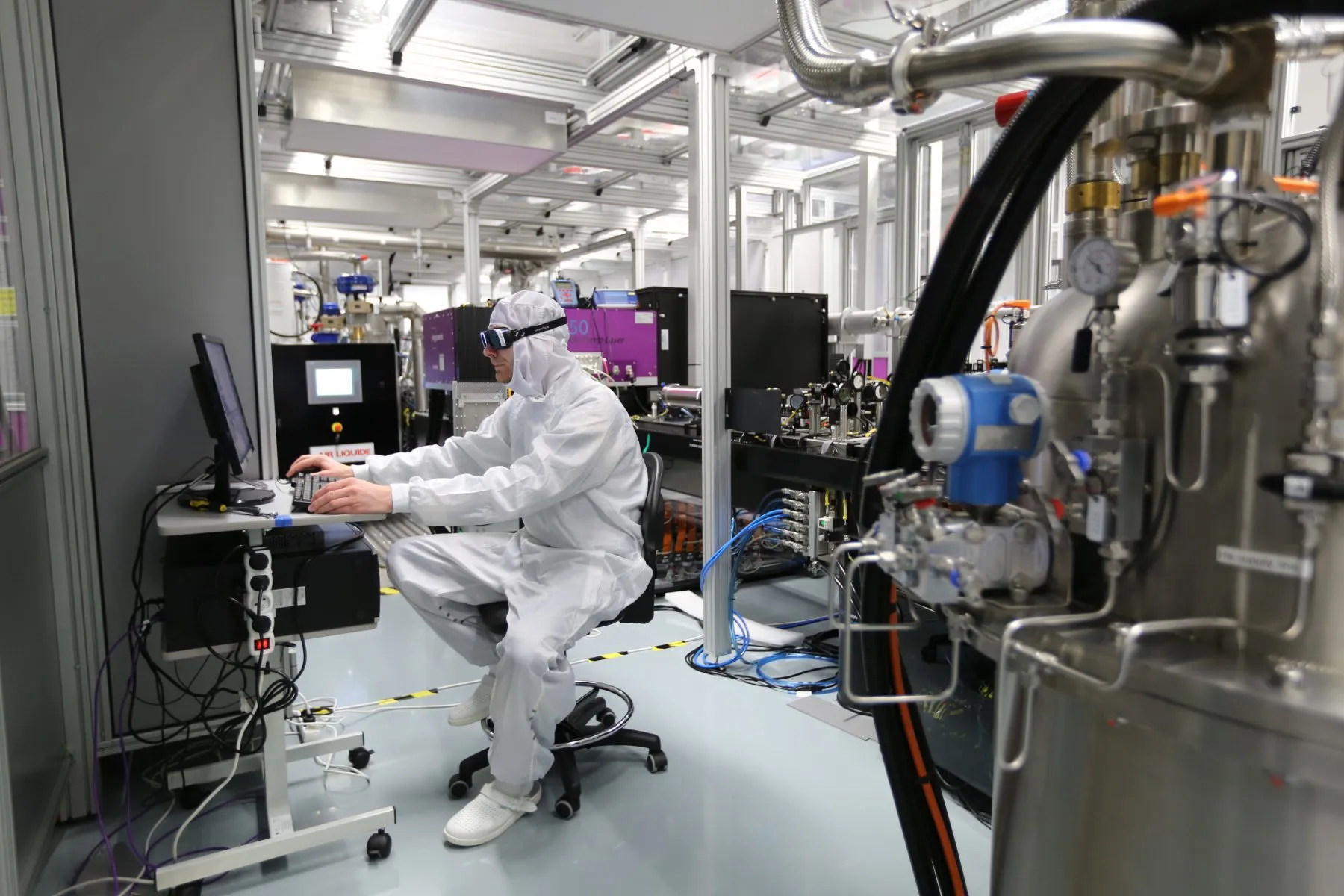
The Centre specialises in the design and development of high-power,diode-pumped solid-state pulsed laser systems (DPSSLs)—the foundation for advanced processes such as Laser Shock Peening (LSP), Laser Micromachining, Laser-Induced Damage Threshold (LIDT) testing, and precision surface structuring. These technologies are transforming established practices across multiple sectors,including optics, electronics, materials engineering, and medical technology,helping industry partners achieve higher performance, durability, and efficiency in their products and processes.
HiLASE is organised into two core divisions: the Advanced Laser Development Department, which designs and builds world-leading laser systems, and the Industrial Laser Applications Department, which develops real-world solutions using these breakthroughs. Its flagship system, BIVOJ, has achieved several world records for laser output energy and processing performance.
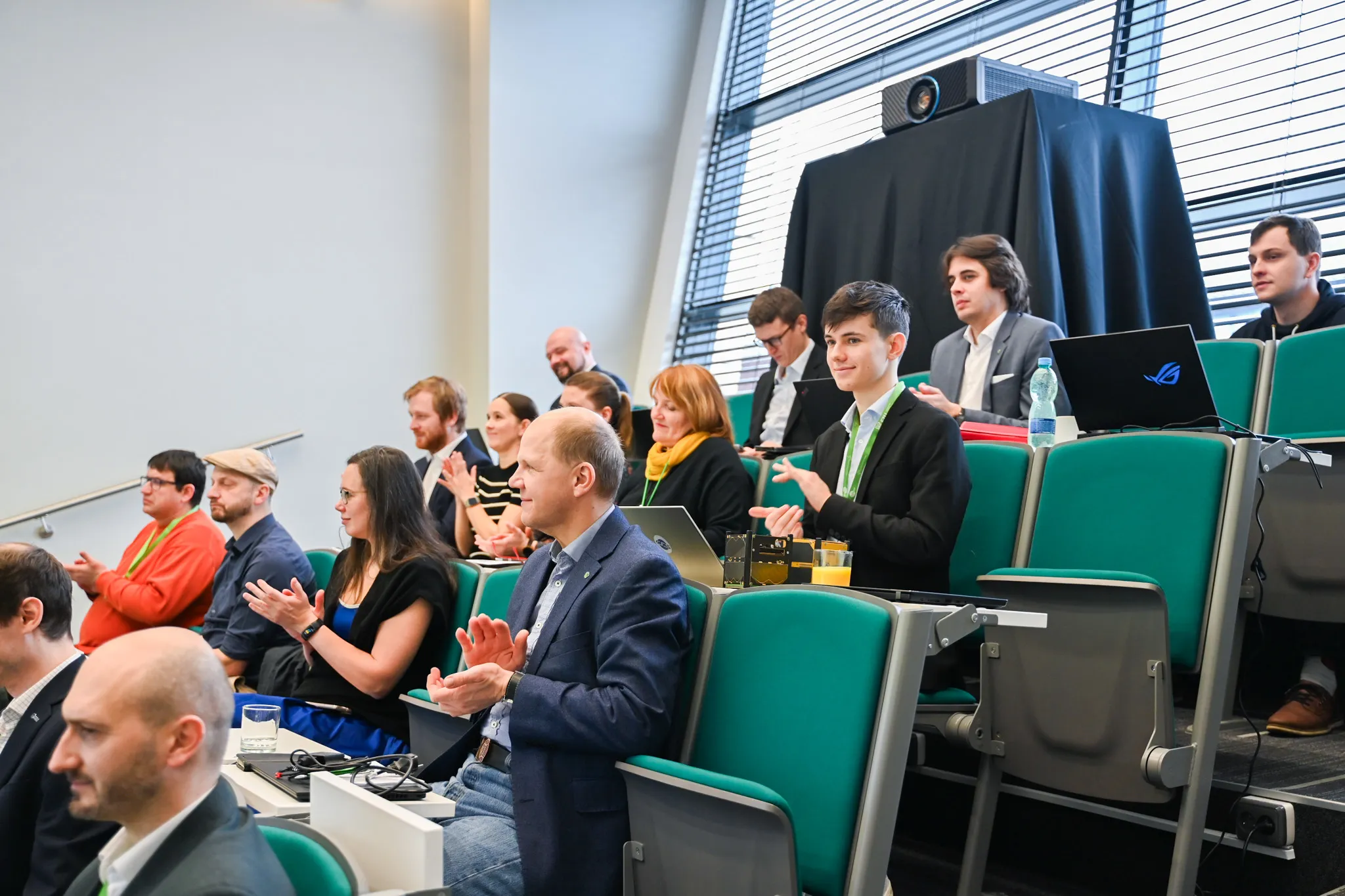
More than a traditional laboratory, HiLASE fosters a multidisciplinary ecosystem that unites scientists, engineers, and industrial users under one roof. By integrating experimental development with technology transfer and industrial collaboration, the Centre bridges the gap between research and real-world deployment. Through its innovations, HiLASE continues to push the limits of laser performance and to strengthen the global competitiveness of advanced photonics and manufacturing.
The Industrial Laser Applications Department focuses on transferring cutting-edge laser technologies into real industrial use. Its activities include advanced materials processing such as laser micromachining, surface structuring, laser cleaning, and laser shock peening. The team develops customized solutions for partners in sectors including aerospace, automotive, energy, and medical engineering.
By combining high-power and high-energy laser systems with deep expertise in industrial processes, the department bridges the gap between fundamental research and practical applications. It also collaborates closely with international companies and research organizations, aiming to strengthen competitiveness and drive innovation through laser-based technologies.
This internship offers direct exposure to the defense sector at the intersection of laser technology and strategic market development. By joining HiLASE, you will gain valuable experience in advanced photonics, international cooperation, and technology commercialization, while contributing to projects that have a real impact on the future of defense capabilities.
From June 14 to September 5, 2027 (adjustable at the discretion of the organisation)
【Advanced Laser Development Department】
The Advanced Laser Development (ALD) Department at the HiLASE Centre focuses on research and development of advanced solid-state laser systems and related photonic technologies. Our work combines fundamental laser physics with engineering, system integration, and application-driven development, providing students with an opportunity to participate in projects that connect scientific research with real-world technological challenges.
The department develops high-average-power and high-energy laser sources based on several architectures, with a strong emphasis on thin-disk lasers, ultrashort-pulse amplification, nonlinear frequency conversion, and laser systems operating at both conventional and emerging wavelengths. Current activities include picosecond and femtosecond Yb-based laser systems, lasers operating around 2 µm, novel gain materials, frequency conversion into the visible and ultraviolet spectral regions, beam shaping, adaptive optics, and advanced laser diagnostics and control.
Interns can get involved in experimental laboratory work, optical design, numerical modelling, laser assembly and alignment, the characterization of laser systems, data analysis, or the development of dedicated optical and mechanical components. Depending on their background, projects can be tailored to students in physics, photonics, electrical engineering, mechanical engineering, or related disciplines.
ALD works in close collaboration with universities, research institutes, and industrial partners in the Czech Republic and abroad. Students gain experience in an international research environment and can contribute directly to ongoing national and international R&D projects.
The internship in the Advanced Laser Development (ALD) Department at the HiLASE Centre is focused primarily on hands-on experimental work in the field of advanced laser and optical systems. Students will have the opportunity to participate directly in ongoing laboratory activities related to the development, testing, and characterization of high-power solid-state laser systems and their optical subsystems.
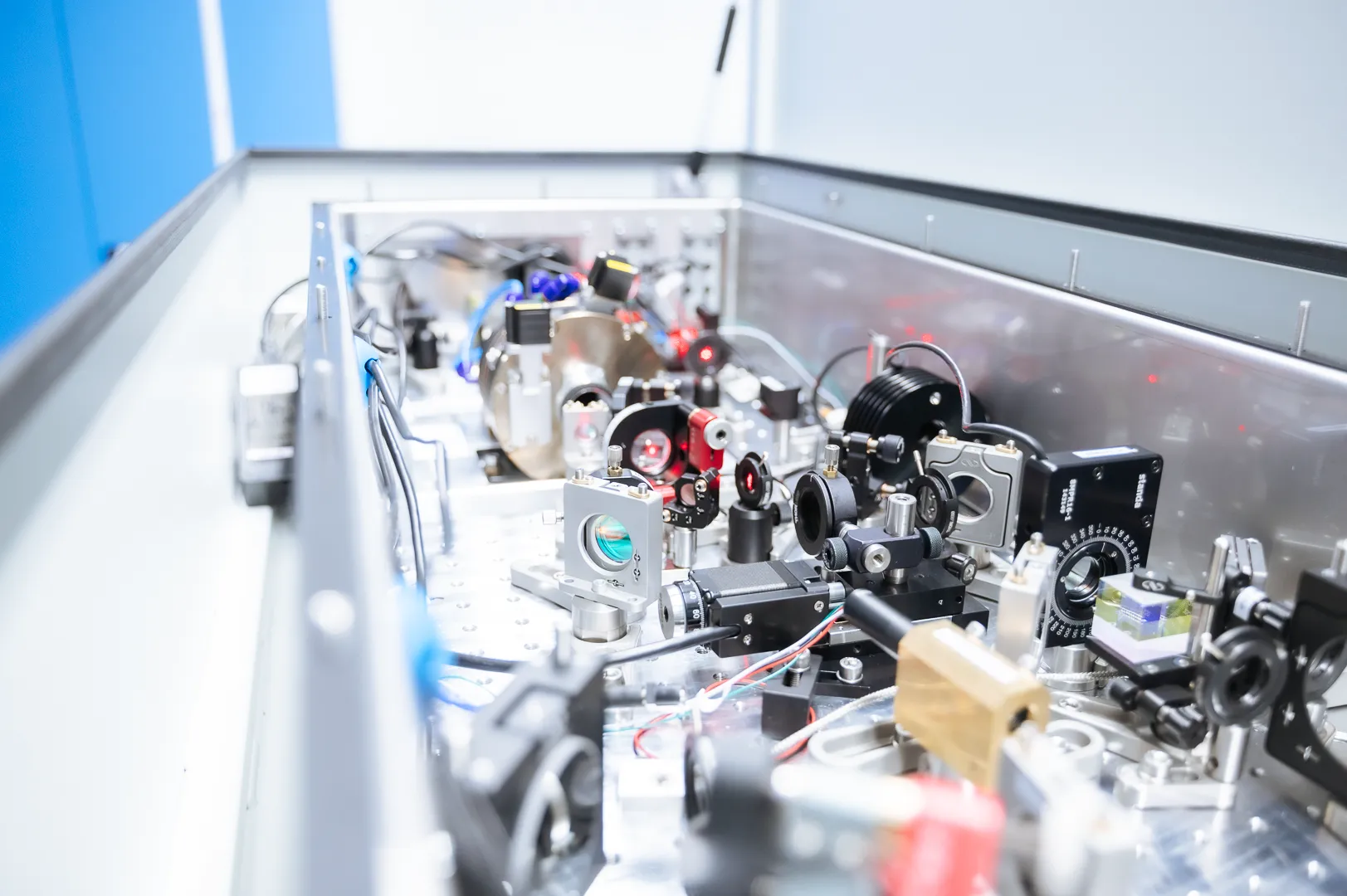
Typical internship tasks may include participation in laser experiments, testing and characterization of optical components, alignment and optimization of optical setups, construction of beam delivery and diagnostic systems, and measurement of laser parameters such as beam quality, power, pulse energy, temporal characteristics, and spectral properties. Depending on the specific project, students may also contribute to the development and testing of nonlinear optical stages, beam shaping systems, pump optics, or laser resonators.
For students with a stronger interest in theoretical or numerical work, the internship can also include the design and optimization of optical systems using ray-tracing software, numerical modelling of laser and optical components, or thermo-mechanical simulations in COMSOL Multiphysics. These activities can be combined with experimental verification in the laboratory.
The exact internship topic will be adapted to the student’s background, interests, and the current research activities of the ALD team. The aim is to provide practical experience with real research and development tasks while allowing the student to work closely with experienced laser physicists and engineers in an international research environment.
From June 14 to September 5, 2027 (adjustable at the discretion of the organisation)
【Engineering and Technical Support Department】
The Engineering and Technical Support (ETS) Department at the HiLASE Centre provides comprehensive mechanical, optomechanical, electronic, and control-system development for the Centre’s high-power laser technologies. ETS covers the full engineering workflow — from initial concept and design through fabrication, assembly, commissioning, testing, and certification — and serves as the core technical backbone for scientific teams. The construction group designs everything from micrometre-precision components to large-scale vacuum and laser-beam distribution systems, including optomechanical mounts, housings, safety enclosures, and custom experimental setups. The electronics team develops and modifies laboratory instruments, prototypes analog and digital systems, and maintains specialized electronics for laser systems. The control-systems team designs automated industrial control solutions for advanced laser technologies, ensuring reliability, safety, and user-friendly operation. Collectively, ETS enables HiLASE’s research by delivering robust engineering solutions, maintaining key laboratory infrastructure, and tackling complex technical challenges across optics, mechanics, electronics, and automation.
The Optical Engineering & Technical Support Internship offers [hands-on / hands on] experience in [laser-mechanical / laser mechanics] design, optical hardware preparation, and structured engineering workflows within ongoing academic research projects. The intern will assist with assembling and maintaining optical setups, performing basic alignment and diagnostic tasks, preparing technical documentation, and supporting [ECSS-aligned / ECSS aligned] materials. Responsibilities include organizing laboratory experiments, helping with design analysis, conducting literature searches, preparing diagrams and measurement summaries, and assisting with component [comparisons / comparison]. The role is ideal for a student in [engineering or / engineering, or] a related field who is curious, careful, and willing to learn. The internship provides practical exposure to real optical systems, insight into academic space technology development, and guidance in structured [problem-solving / problem solving] and technical communication.
From June 14 to September 5, 2027 (adjustable at the discretion of the organisation)
【Industrial Laser Applications Group】
The Industrial Laser Applications (ILA) group at the HiLASE Centre focuses on transferring cutting-edge laser technologies into practical industrial applications. Its activities cover advanced materials processing, including laser micromachining, surface structuring, laser cleaning, laser shock peening, and high-power laser interactions with advanced materials. The team develops customized solutions for partners in sectors such as aerospace, automotive, energy, medical engineering, and emerging space applications.
By combining unique high-power and high-energy laser systems with expertise in industrial processes, ILA bridges the gap between fundamental research and practical applications. The group collaborates closely with international companies, research organizations, and space-oriented partners, aiming to strengthen competitiveness and drive innovation through laser-based technologies. In the context of space applications, the group is increasingly interested in laser-matter interactions under extreme conditions, including vacuum, thermal stress, contamination, and space-relevant material responses.
The HiLASE Centre is offering an internship for candidates interested in the experimental study of laser ablation for future space applications. The internship will focus on laser interactions with space-relevant materials, including metals, ceramics, optical materials, and mineral or regolith-like analogues, under controlled laboratory and space-like conditions. The work is relevant to laser-based space mining, in-situ resource utilization, laser momentum transfer, material sampling, surface modification, and the qualification of materials for high-power space laser systems.
As a Laser Ablation in Space Applications intern, you will participate in the preparation and execution of laboratory experiments using HiLASE laser infrastructure. You will help select and prepare candidate materials, define suitable laser exposure parameters, support experiments in air and, where feasible, under vacuum or in controlled environments, and document material responses after laser exposure. The work may include the observation of ablation thresholds, crater morphology, melting, cracking, ejecta formation, contamination effects, and differences between pulse regimes.
The intern will also contribute to data processing and interpretation, including the calculation of laser fluence and intensity, the preparation of exposure matrices, the documentation of experimental uncertainty, optical or microscopic inspection of ablated samples, and a comparison with published data. Depending on laboratory availability, the internship may involve experiments with high-energy or high-average-power laser systems, LIDT-related setups, and space-relevant sample holders or test chambers.
The expected outcome is a technical report and presentation summarizing experimental results, material behavior, and recommendations for follow-up studies. The internship will provide hands-on experience at the interface of high-power laser technology, laser-matter interaction, space engineering, and applied photonics.
Applicant Profile:This internship is ideal for students or recent graduates in physics, photonics, materials science, aerospace engineering, mechanical engineering, electrical engineering, or related fields. Candidates should have a strong interest in laser-matter interaction, experimental work, and space applications.
Must-Haves:Solid analytical skills; interest in experimental laser research; ability to work carefully in a laboratory environment; strong organizational and documentation habits; proficiency in English; and the ability to prepare technical notes, figures, and presentations.
Valued Skills:Any experience with optics, lasers, spectroscopy, microscopy, materials characterization, vacuum systems, thermal testing, Python/MATLAB for data analysis, CAD for simple sample holders, or laser safety procedures. Familiarity with laser ablation, LIDT, space materials, regolith simulants, or plasma/surface diagnostics is an advantage but not required.
Nice-to-Haves:Interest in space mining, asteroid/lunar materials, laser propulsion, laser momentum transfer, in-situ resource utilization, and high-power laser systems for space applications.
From June 14 to September 5, 2027 (adjustable at the discretion of the organisation)
Za Radnicí 828, 252 41 Dolní Břežany, Czech Republic